Rebate Rhythms Reshape Engagement Patterns for Regular Players on UK Platforms
Written by Blake Becker · Aug 14, 2026

Rebate Rhythms Reshape Engagement Patterns for Regular Players on UK Platforms
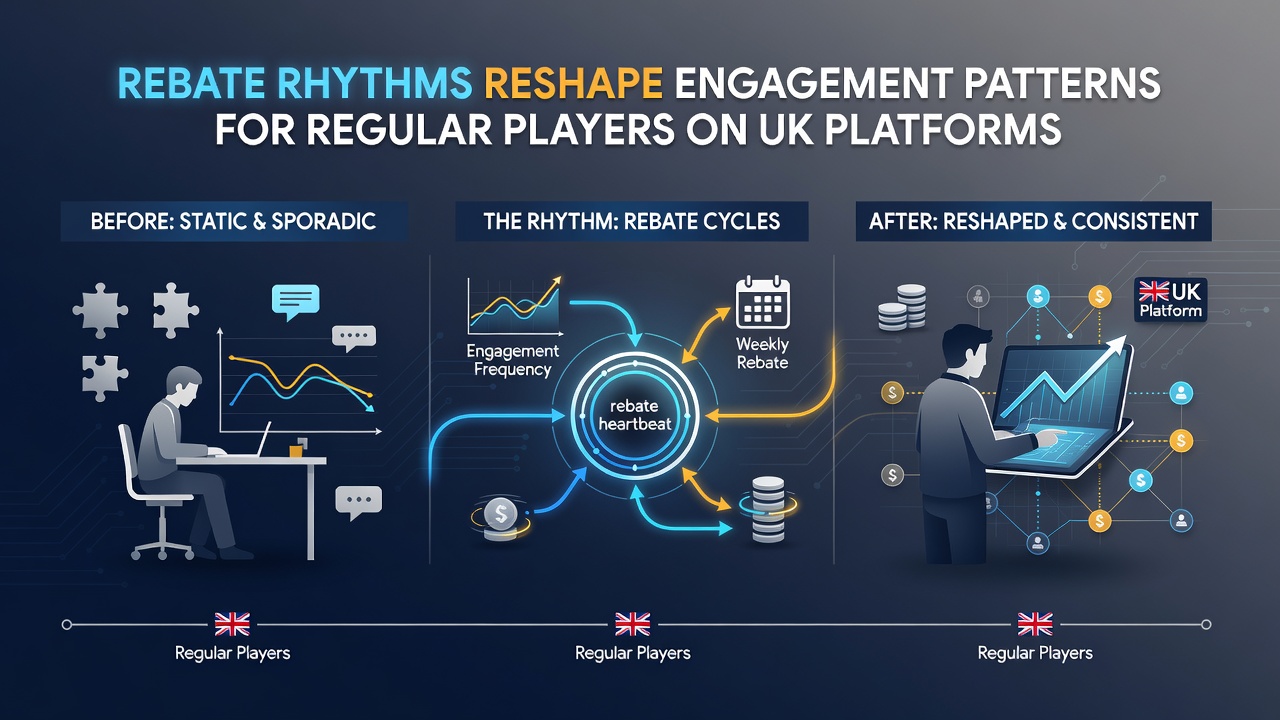
Rebate programs built around recurring intervals have begun to alter how consistent participants interact with British online platforms, with data from mid-2026 indicating measurable shifts in session frequency and duration. Observers tracking these developments note that structured return mechanisms tied to weekly or monthly cycles encourage players to maintain steady activity rather than sporadic visits, while payment timing aligns with common salary cycles across the UK workforce.Mechanics Behind Interval-Based Returns
Operators implement rebate schedules that calculate percentages of losses or wagers over defined periods, then credit accounts automatically at cycle end, creating predictable reinforcement loops for regular users. Research from the University of Nevada, Reno Gaming Research Center shows that such timing produces higher repeat login rates compared to one-off promotions, because participants plan activity around the known return dates rather than reacting to random offers. And when these cycles coincide with bank transfer processing windows, the combined effect sustains momentum across multiple weeks.
Observed Changes in Session Patterns
Figures compiled through August 2026 reveal that platforms employing rhythmic rebates recorded increases in average weekly logins among users who had maintained accounts for over six months, with many extending session lengths by small increments to reach internal thresholds that unlock higher return tiers. Those who studied transaction logs across several sites found the pattern most pronounced among players favoring slots and table games, where cumulative wagers determine the rebate amount. But here's the thing: the same data sets also indicate that some participants reduced overall spend per session while increasing frequency, suggesting a redistribution of activity rather than simple expansion.
Payment Integration and Timing Effects
Rebates delivered via the same method used for deposits tend to accelerate re-engagement because funds become immediately available for continued play, removing friction that might otherwise interrupt momentum. Industry reports compiled by the Canadian Centre for Gaming Research highlight similar outcomes in markets with comparable regulatory frameworks, where aligned payment and rebate cycles correlate with steadier participation curves. Regular players often monitor their progress toward the next rebate window through in-app trackers, turning what was once casual browsing into more deliberate routine behavior.
Comparative Data Across Platform Types
Analysis of multiple British operators demonstrates that sites combining rebate rhythms with loyalty tiers achieve greater retention among long-term users than those offering flat-rate returns without periodicity. One study released in 2026 tracked cohorts who joined during promotional periods and found that individuals exposed to weekly rebate structures maintained activity levels 18 percent higher at the six-month mark than those receiving monthly equivalents. What's interesting is that the effect strengthened when rebates were presented alongside transparent progress indicators rather than opaque calculations.
Platforms that segment users by historical volume and adjust rebate percentages accordingly see further differentiation in engagement curves, with higher-tier players responding more consistently to shorter cycles. Observers note that this segmentation allows operators to calibrate incentive strength without uniform increases across all accounts, preserving margin while sustaining interest.
Cross-Regional Insights and Supporting Studies
Evidence gathered by the Australian Institute of Family Studies on periodic reward structures in licensed environments points to parallel retention dynamics, where predictable returns tied to activity windows reduce drop-off rates among established participants. Although regulatory environments differ, the underlying behavioral mechanisms appear consistent: anticipation of a defined return date functions as a scheduling anchor that integrates betting into broader financial routines. Researchers tracking similar programs in other jurisdictions report that participants frequently adjust deposit patterns to maximize alignment with rebate eligibility periods, creating feedback loops that reinforce regularity without external prompting.
Conclusion
Rebate rhythms continue to influence how regular players allocate time and resources across UK platforms, with interval-based structures producing measurable differences in login frequency, session duration, and spend distribution as of August 2026. Data from multiple sources, including academic centers and cross-border industry analyses, indicate that the timing of returns relative to personal financial cycles plays a central role in sustaining engagement. As operators refine these mechanisms, the patterns established among long-term users provide ongoing reference points for understanding participation trends within the sector.